The porch

Application Design
kiosk Design

Overview

I helped visitors become immersed in small town culture by designing a social experience.
The Porch is a social application designed to bring users together in small towns across America. My role in this project was solo end-to-end product design as well as branding and prototyping. This was a 4-week concept project that I completed and presented for a class.

Background

In this school project, I was tasked with solving a problem by creating an application that fostered communication. I was also required to bring in an aspect of a new technology, which was a kiosk in this case.

The Problem

The front porch used to be a place where songs were sung, stories were told and community was built. People used to gather all across small town America and spend hours on the porch. This led to people sharing their favorite things to do and places to see. Nowadays, small towns have so much character but that character is hidden by tourist traps and modern amenities. Visitors have lost these porch conversations, which were opportunities for locals to share their culture with them.

26%

ofAmericans know most or all of their neighbors1

17%

increase in time spent alone2

38%

decrease in people spending social evenings with neighbors3

Timeline

oct 6
oct 20
Nov 3
Ideation Began
Research
Branding
Wireframing
Check-in Presentation
Feedback / Revisions
Prototyping
Testing
Final Presentation

Research

The research stage consisted of competition analysis, user research as well as visual research. The main competitors in the local community application space were Nextdoor and Citizen. Nextdoor was flooded with complaints about poor moderation and overall frustration, while Citizen was mostly safety-focused.

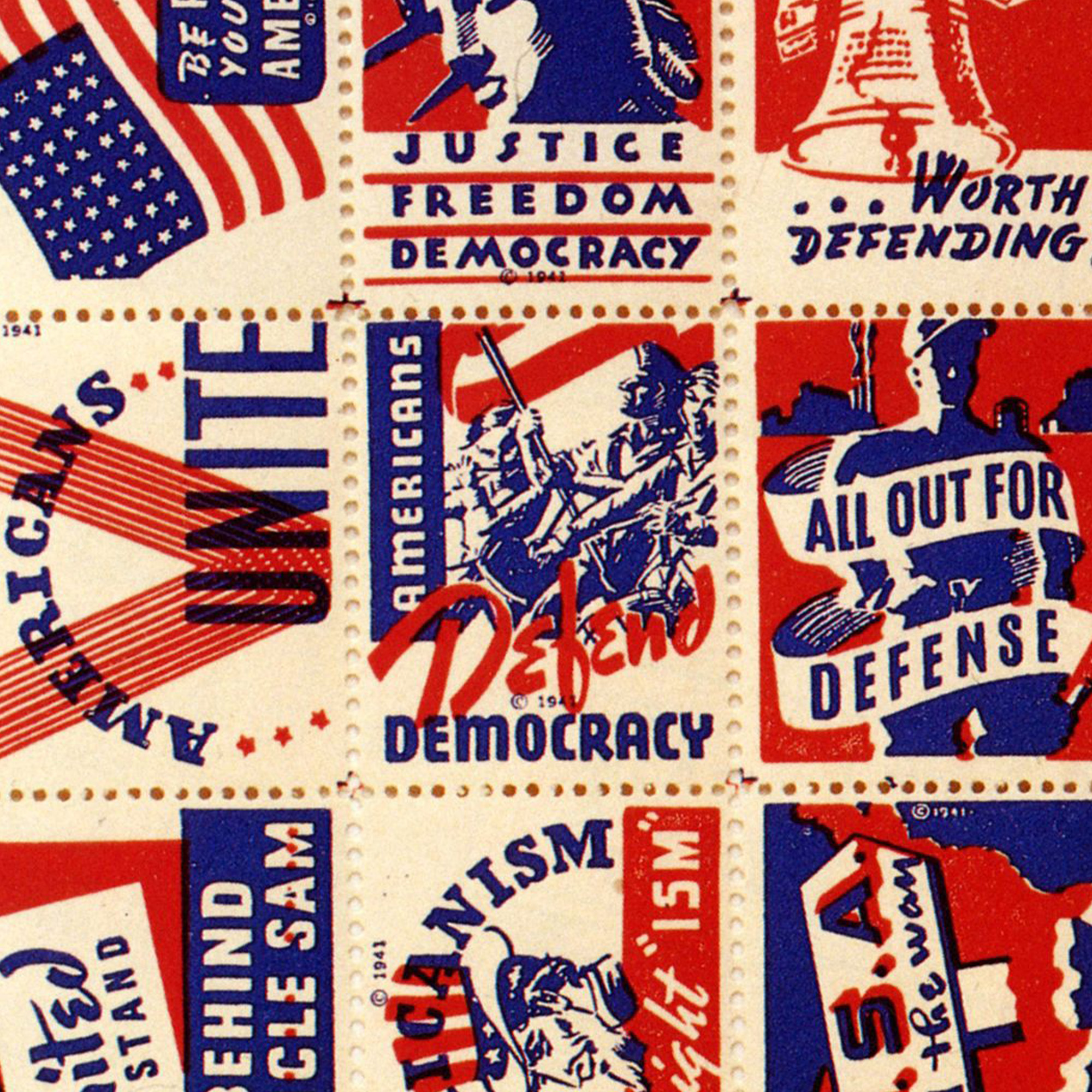
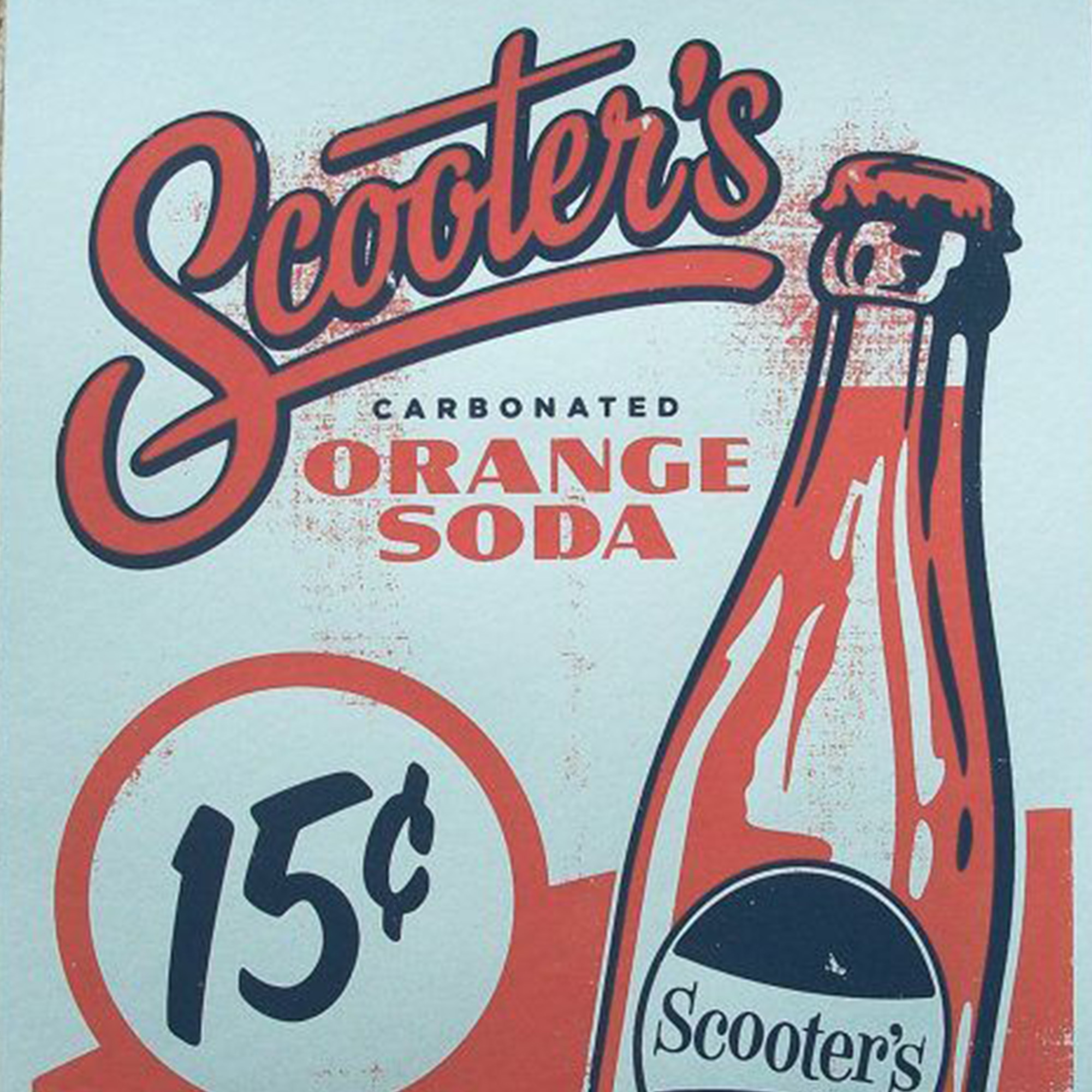
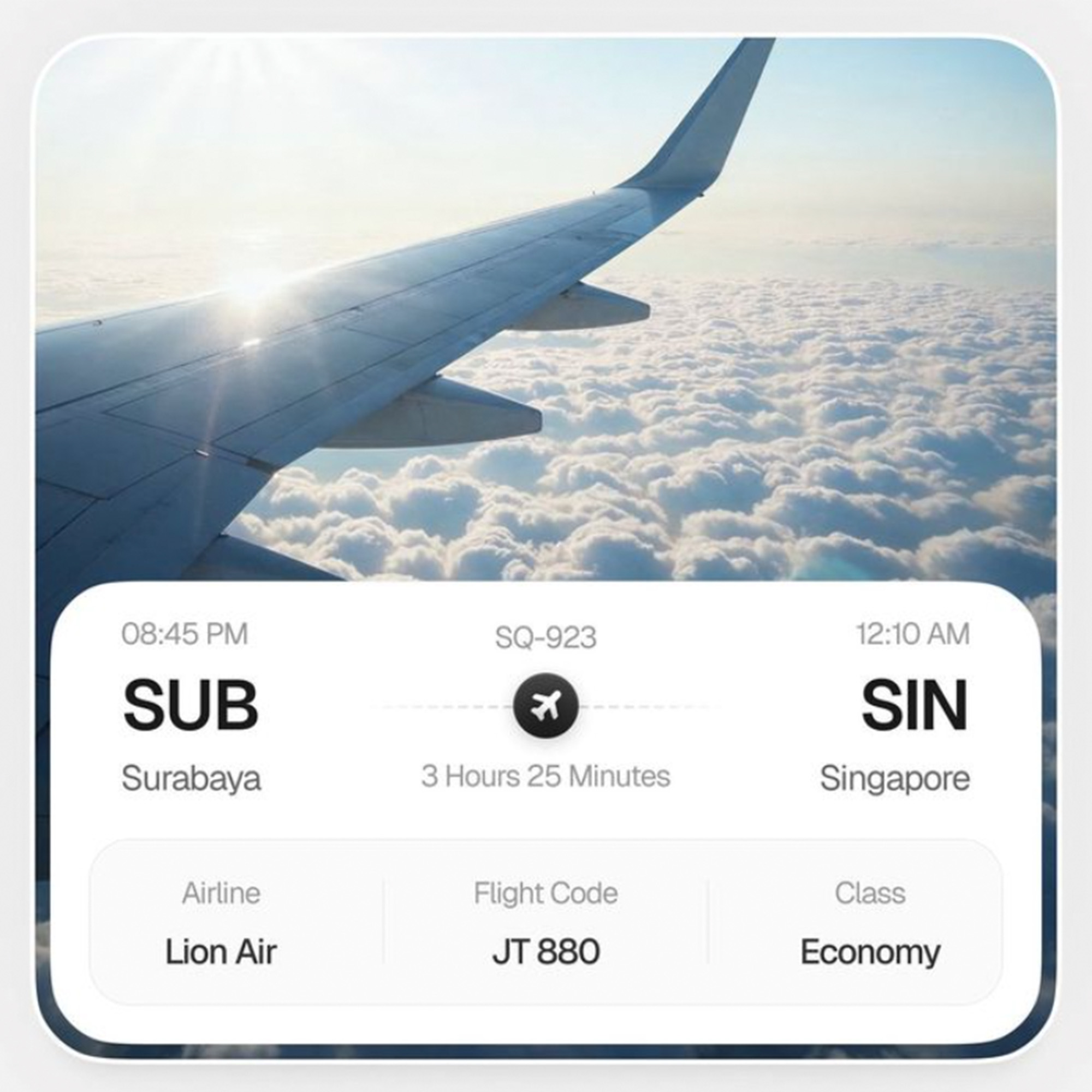
I was inspired by vintage Americana signs, with their flowy, hand-drawn scripts and patriotic color palettes. I also looked at travel applications for clean travel card UI inspiration.
These stamps were a fun piece I found. The typefaces and colors were what I was envisioning.
I especially loved the typefaces in this advertisement. They are playful while communicating to the audience.
The Airbnb application served as inspiration for a lot of my UI. It has white space, clean imagery and communicates clearly to the user.
Similar to Airbnb, this was a card design that I found that I thought was clean and well-designed.

Ideation

After researching this topic, I moved on to ideation & branding. My initial idea was a neighborhood kiosk that displays local info and connects neighbors. To create the brand, I started with writing down words and phrases that I wanted to incorporate. I landed on "The Porch," representing the physical porches that used to be the gathering spot of society. I went for a typographical approach to create the wordmark, inspired by vintage Americana fonts.
Some initial logo sketches, playing around with typography and different ways of writing.
Two different color palette options for the logo. I chose the bottom one to evoke nostalgia and play off that vintage Americana feel.
The final wordmark using Matinee Idol & Fenway Park JF.

Wireframes

With the brand and idea nailed down, the next step was to move on to wireframes. I started out by sketching low-fidelity wireframes and experimenting with different layouts. Once I had enough ideas on paper I brought them into Figma.
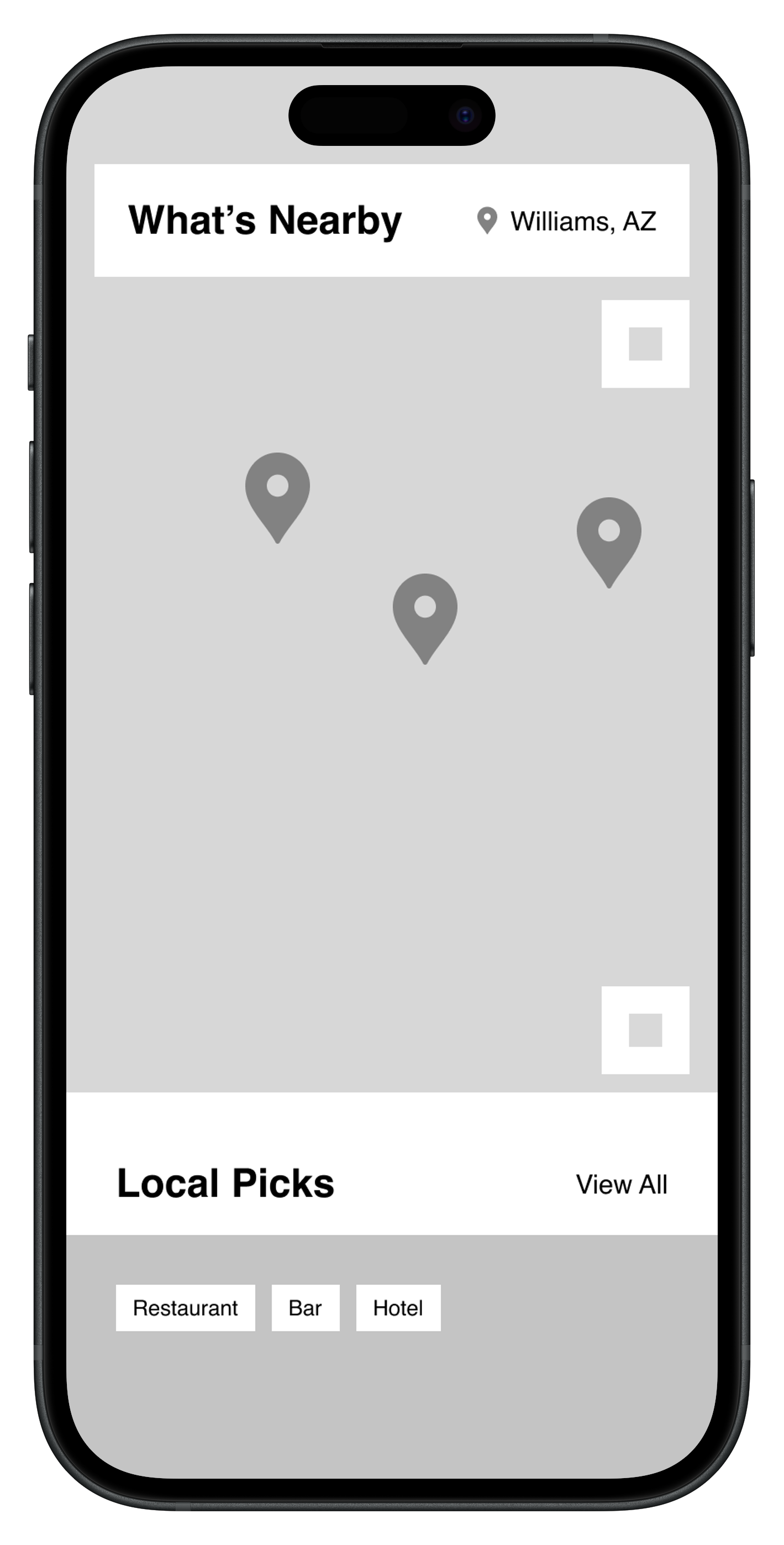
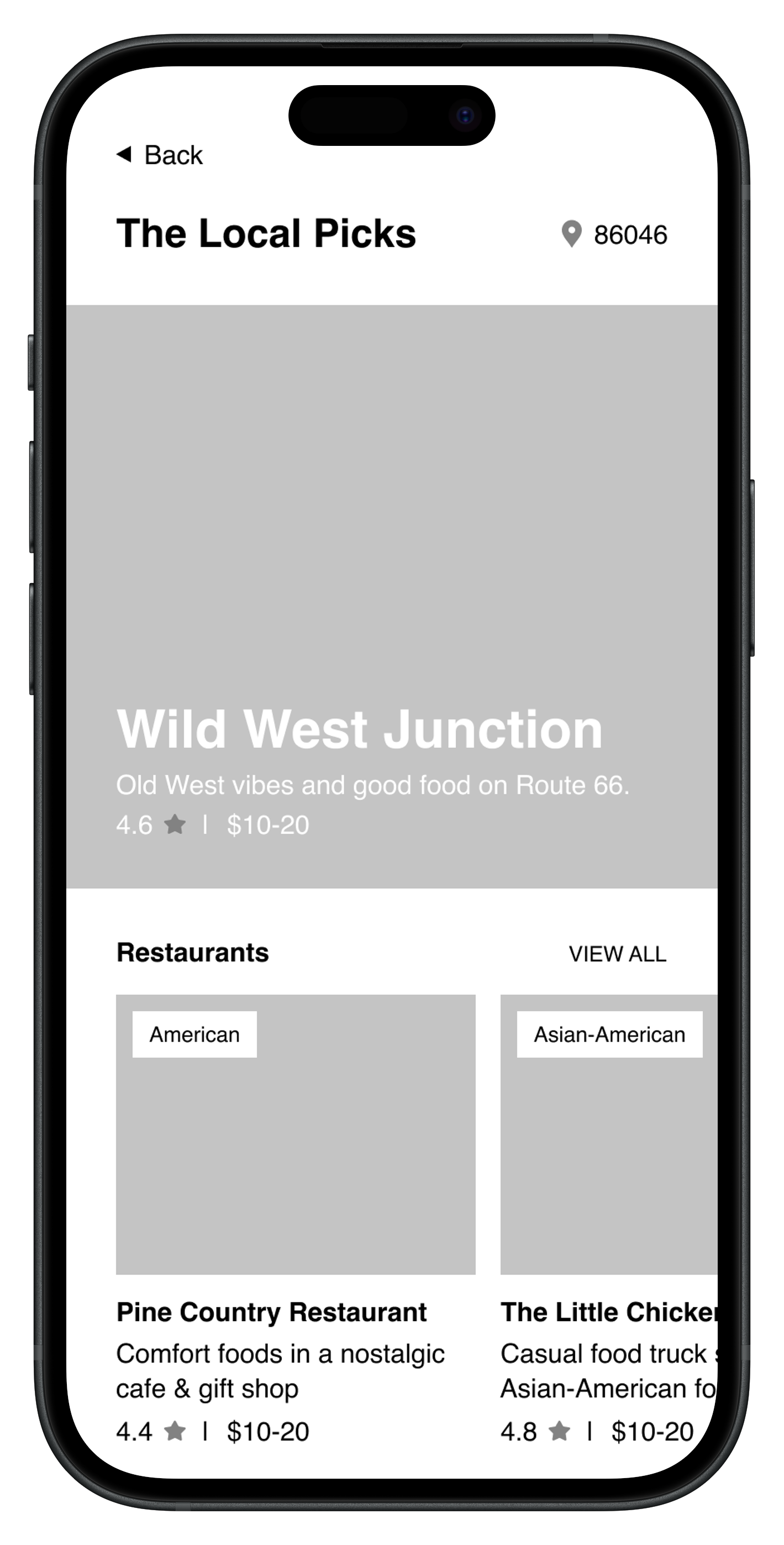
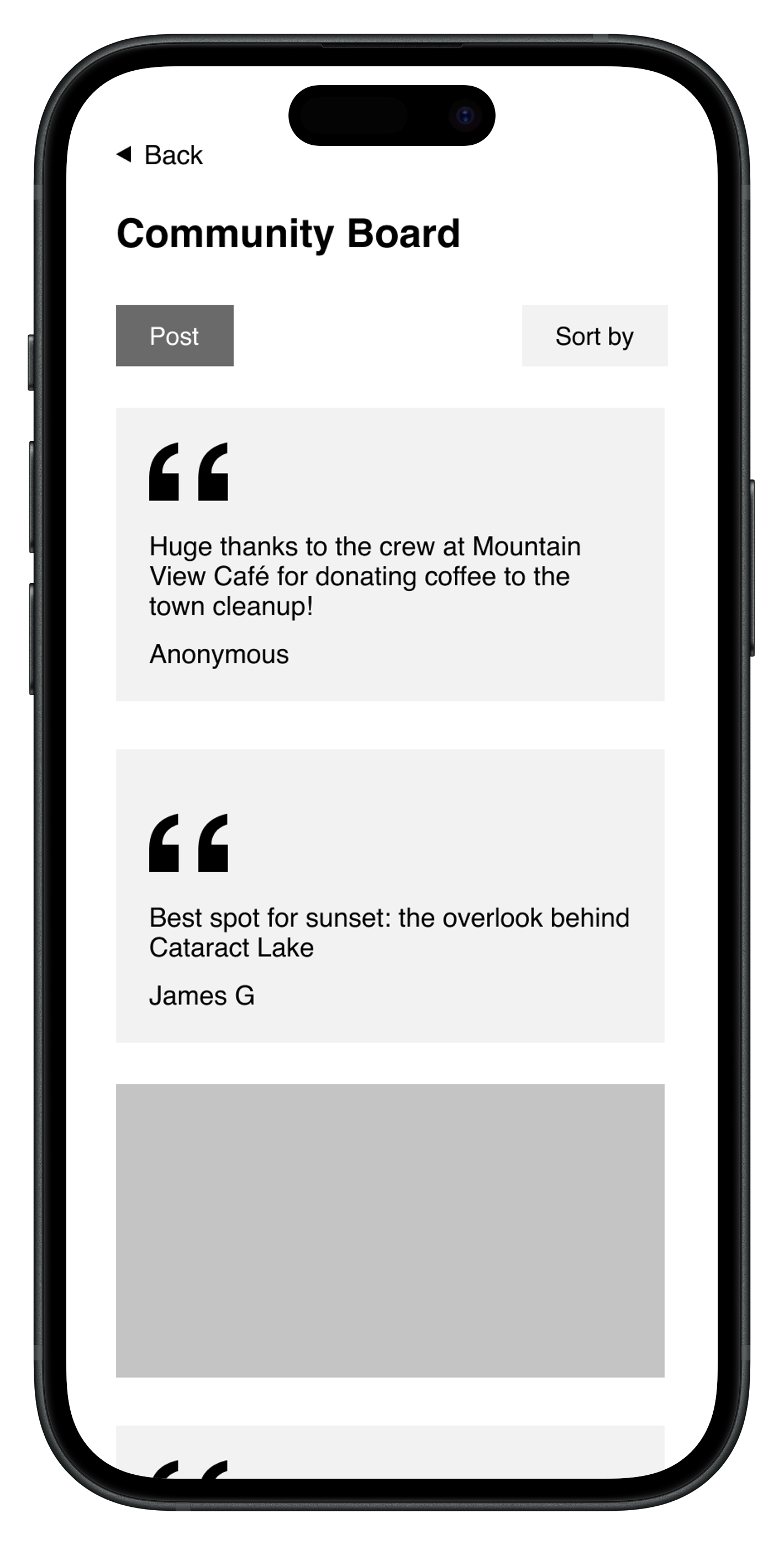
Some of the different pages in the application. My goal was to display information in the most efficient and intuitive way to the user. Creating clear CTAs was a focus of mine as well.

Design

After creating the layout in wireframes, I designed out the screens into comps. I used the color palette I created for the brand and refined the layout into a product ready to hit the market.

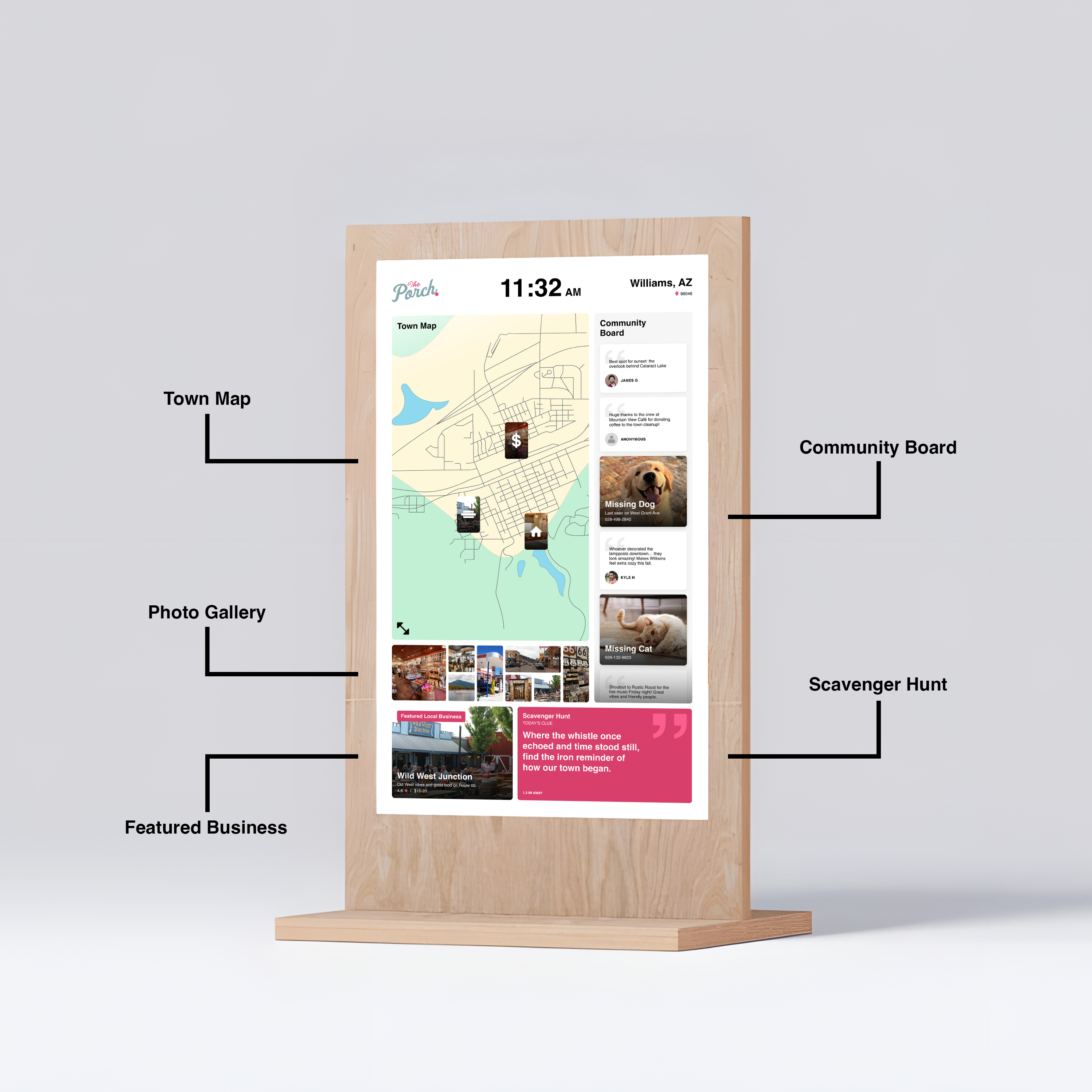
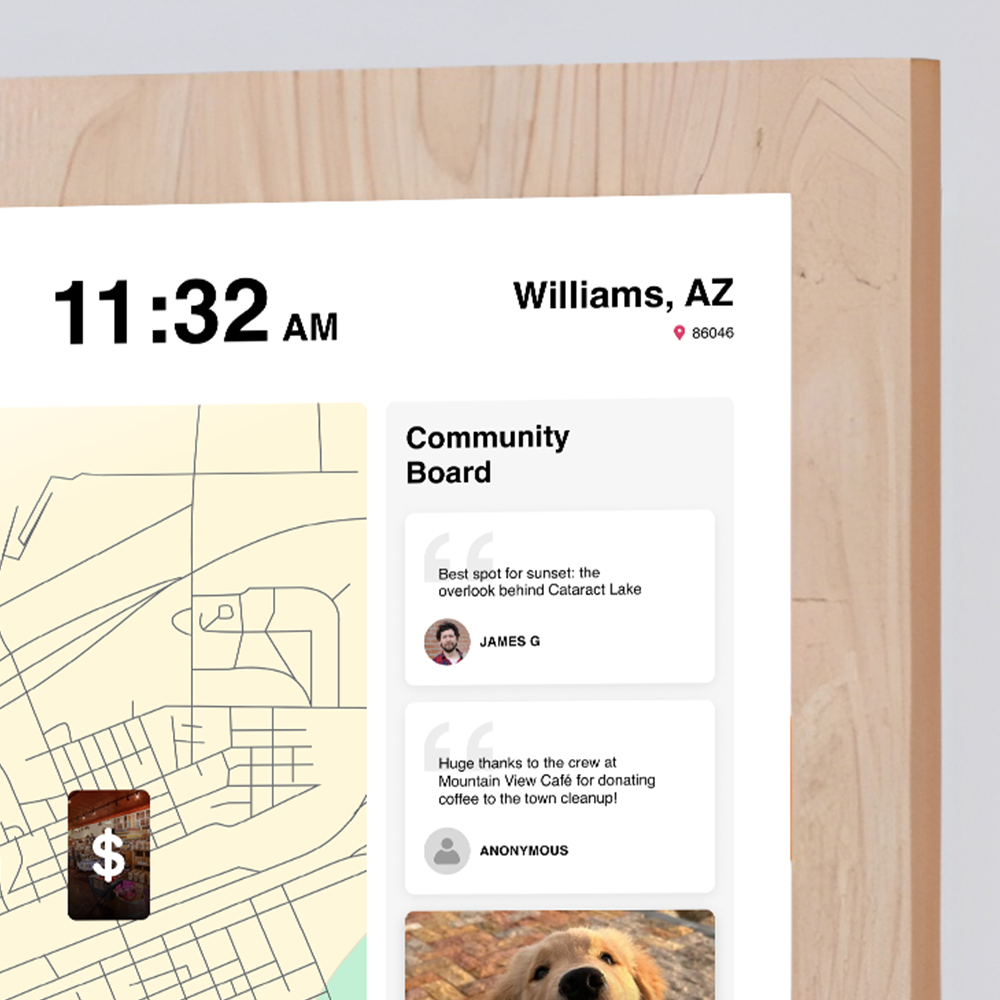
In this stage I also focused on the kiosk design. I aimed to provide the necessary information to users in a way that was simple and intuitive. The map, being the most important feature, takes up the most real-estate, while the community board follows.
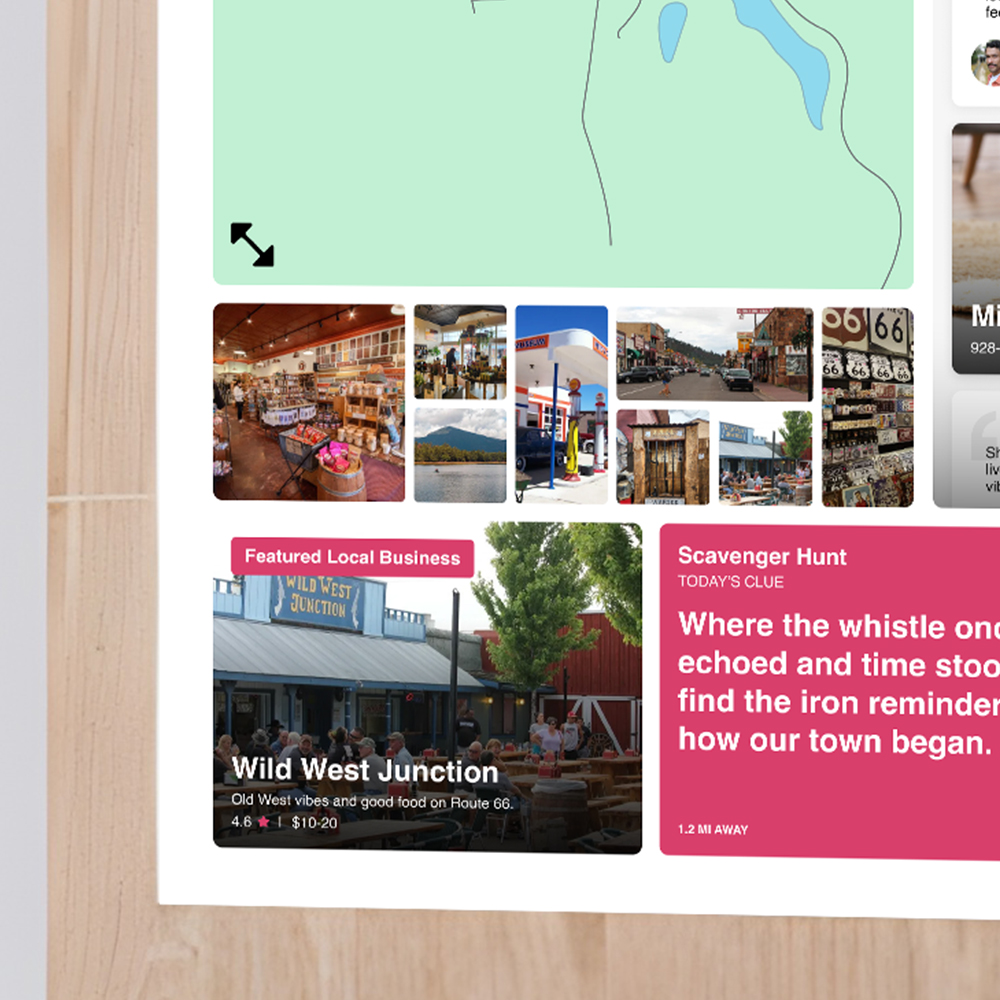
Main screen of the kiosk. Users can view nearby restaurants & shops, look at photos of the town, read the community board and participate in a scavenger hunt.
Each element on the kiosk was designed to optimize a visitor's experience in the local town.

Revisions

As the project went on, I shifted the concept from neighbor-focused to being tourist-focused. I revisited the research stage and strengthened the concept.

The new focus on the tourist filled a much more needed gap, and allows neighbors to collaborate with each other and tourists to create an improved community. This shift enabled me to design for the tourist, thinking about the application from the perspective of an outsider.

Also based on feedback, I redesigned the kiosk to give the user a more organized and efficient experience. I did this by giving it more white space and adjusting section sizes.

Final Solution

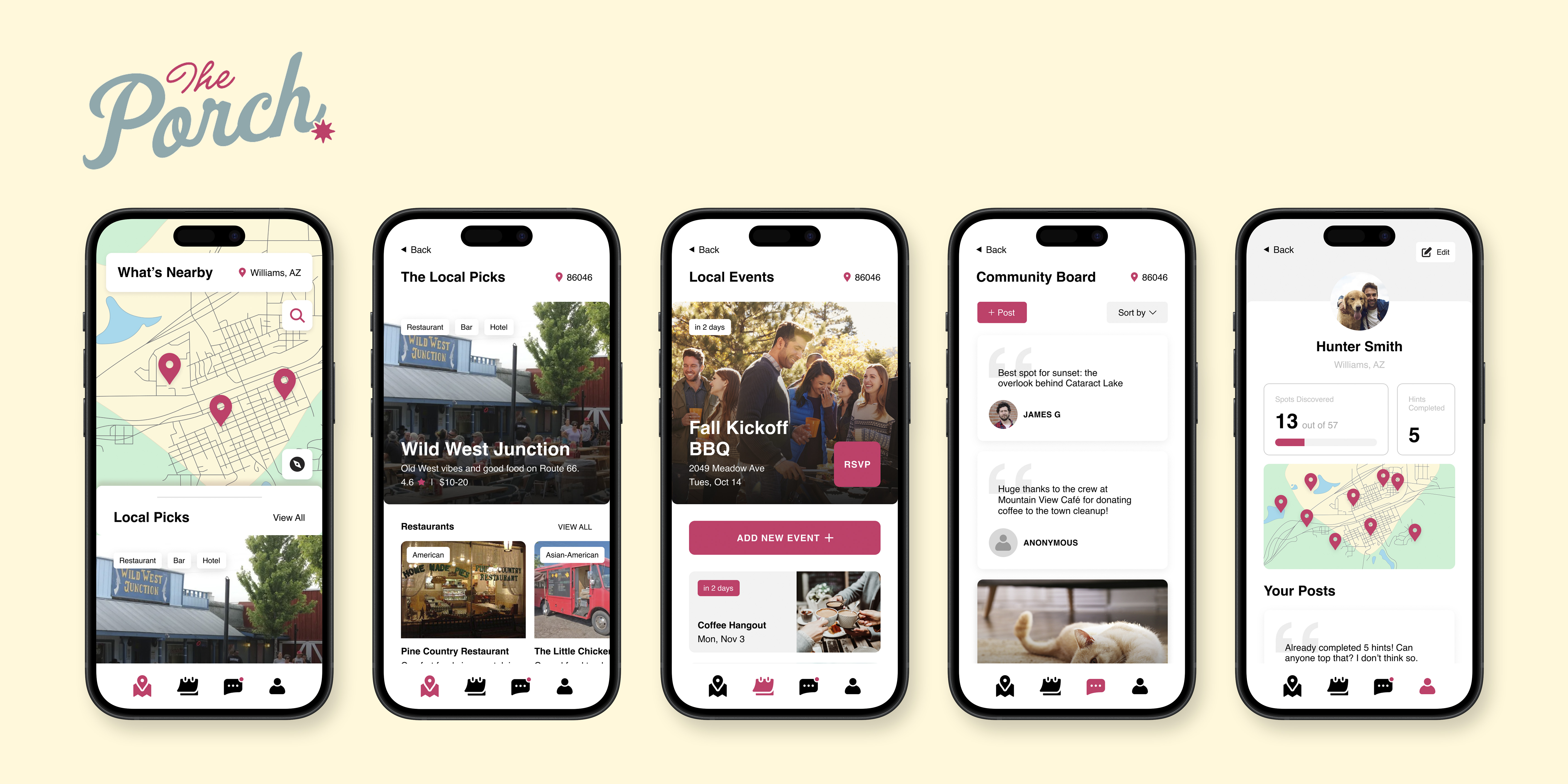
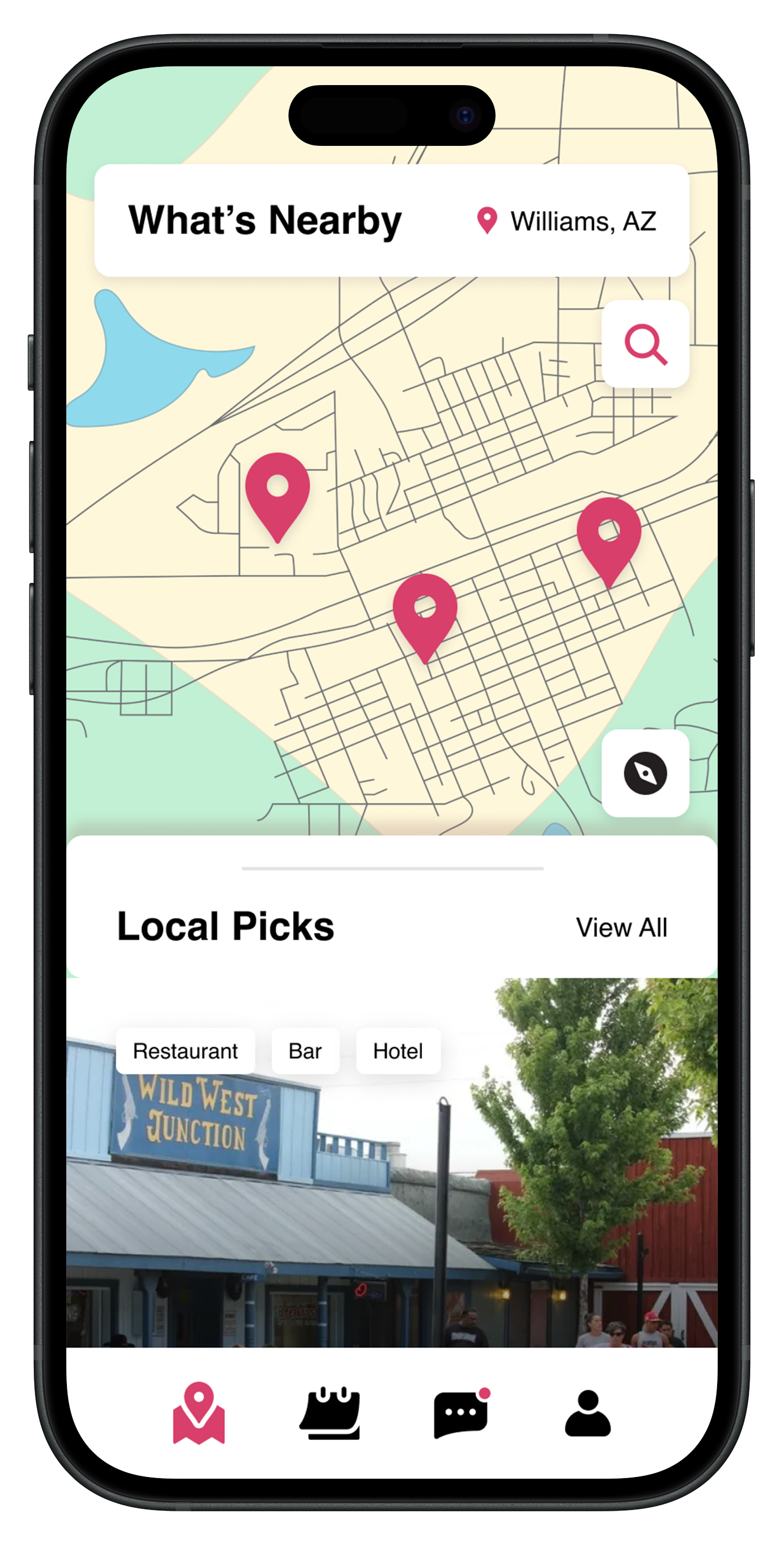
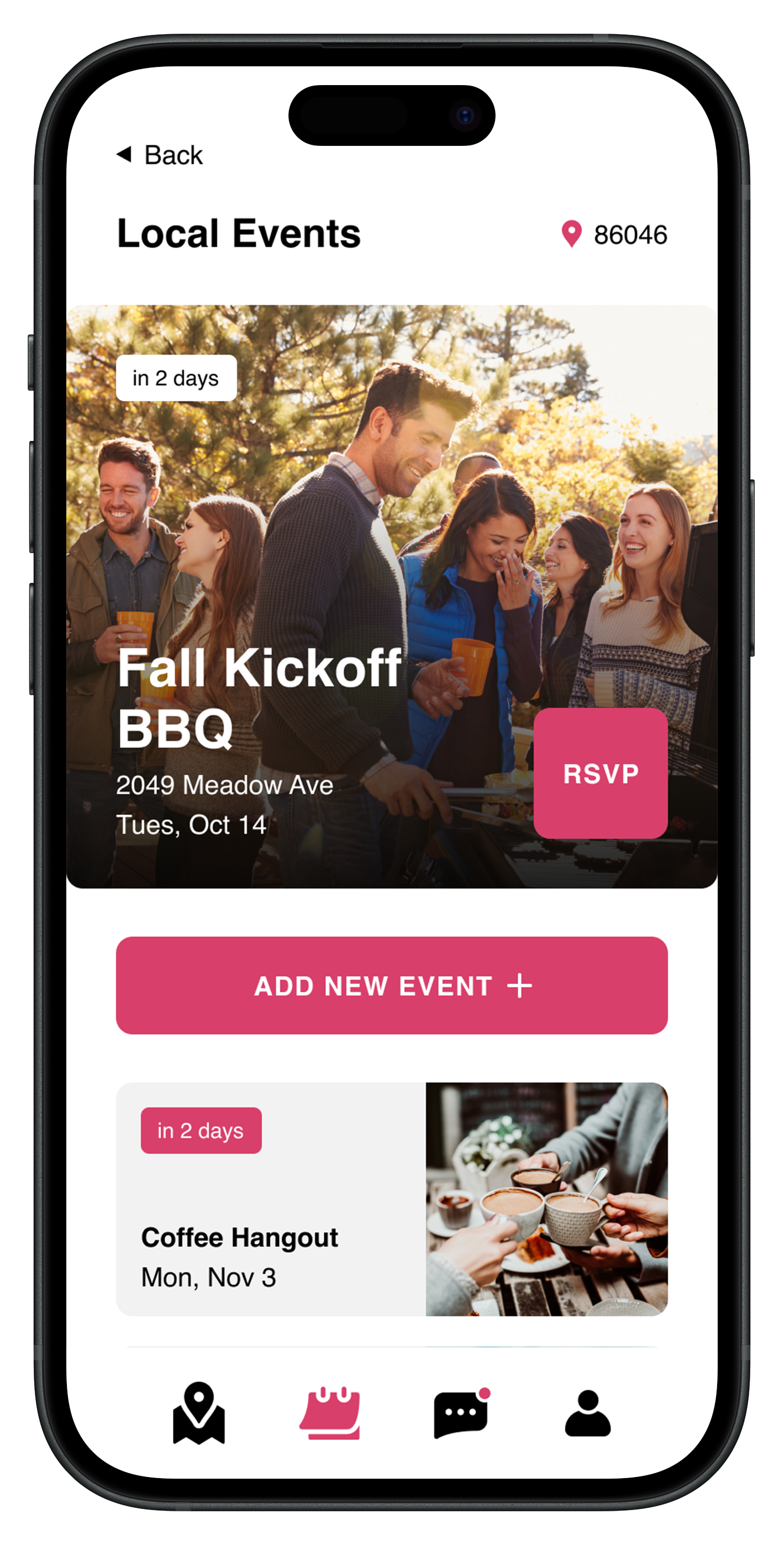
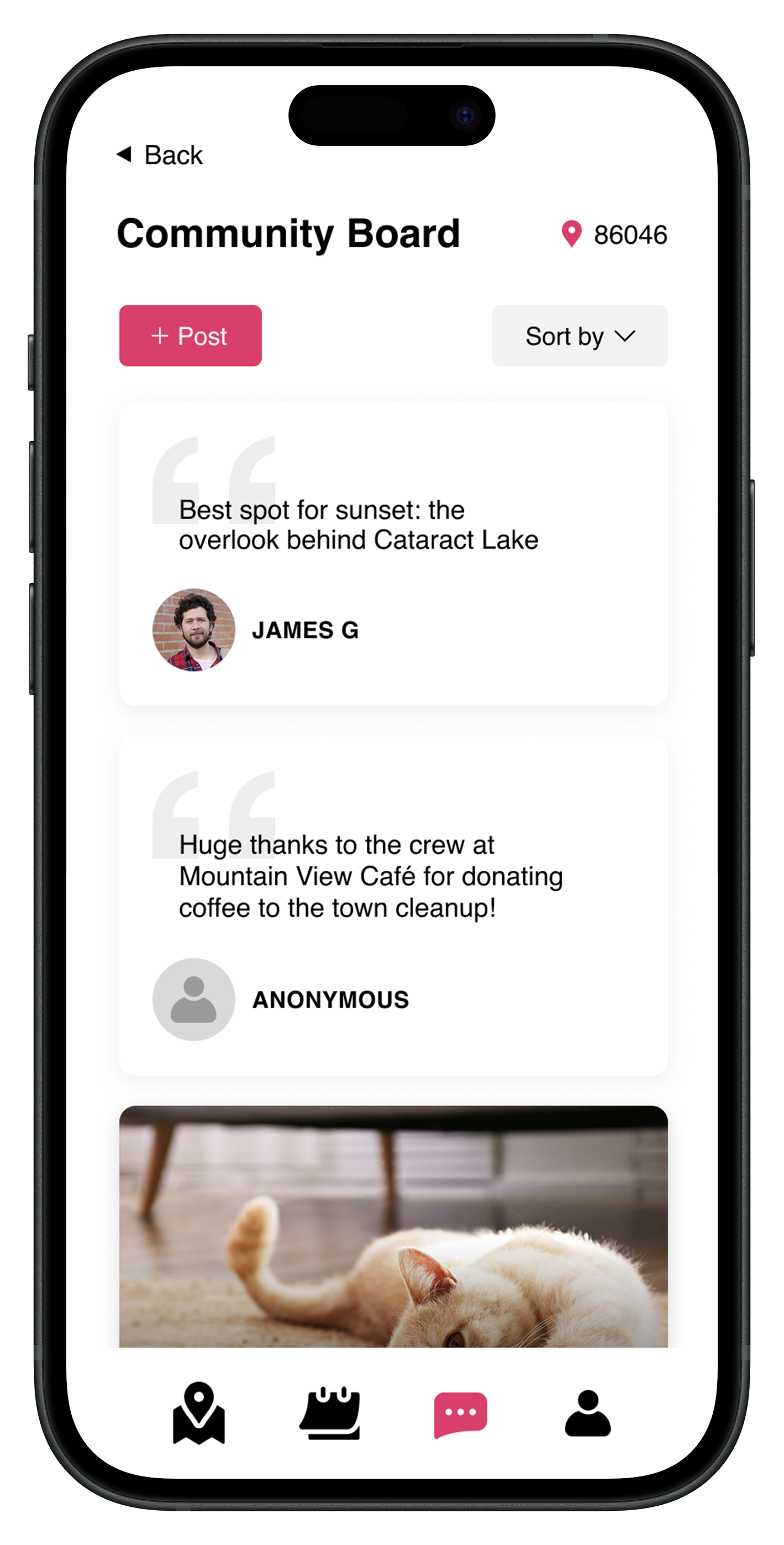
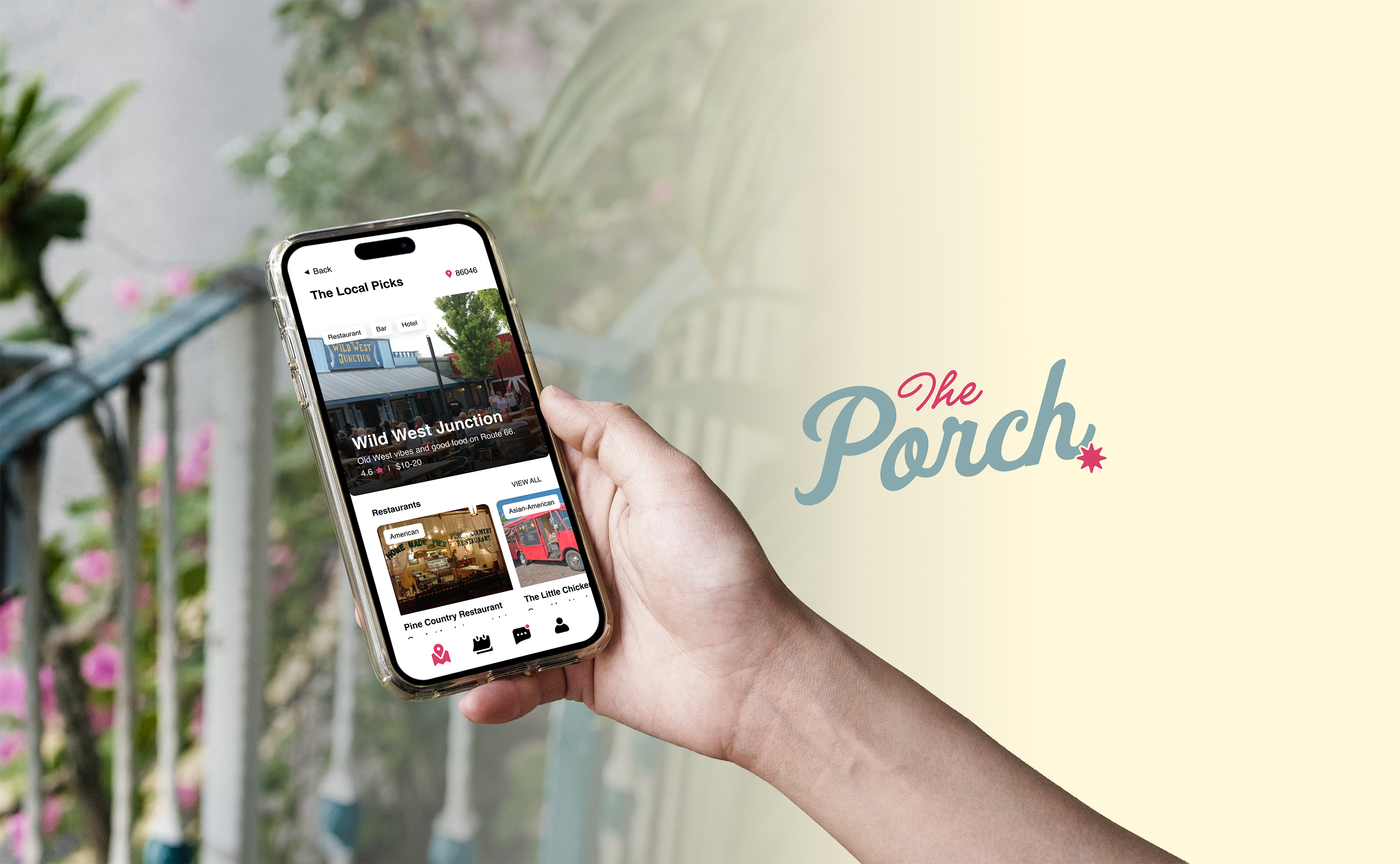
The Porch is an application designed to bring people together. Through offering local recommendations, community events and shoutouts, visitors are welcomed into new communities to experience the authentic character of the town.

Reflection

With the time-constraint, this project turned out better than I could have hoped. This was a good exercise to practice every step of the product design process. If I had more time, I would have loved to implement some user-testing as well as simply more ideation during wireframes, however I'm pleased with the result.
1PEW RESEARCH, 2025, www.pewresearch.org/short-reads/2025/05/08/how-connected-do-americans-feel-to-their-neighbors/
2SCIENCEDIRECT, 2023, www.sciencedirect.com/science/article/pii/S235282732200310X
3INSTITUTE FOR FAMILY STUDIES, 2023, www.ifstudies.org/blog/the-decline-of-trust-and-neighborliness